
If you strip away the design language, the trends, and the visual appeal, home staging comes down to one thing: performance.
Does it help a home sell faster?
Does it increase the sale price?
Does it reduce risk during the selling process?
The answer, backed by real data, is yes across all three.
But not all stats are equally useful.
Some numbers sound impressive but do not change how sellers think. Others directly reshape how you approach selling your home.
In this post, we break down three of the most important staging statistics and what they actually mean in real-world terms, especially when combined with smart interior designing.
Stat 1: Buyers Spend More Than 6x Longer in a Staged Home
One of the most powerful and overlooked metrics in real estate is time.
According to your provided data, buyers spend around 6 minutes walking through a vacant home. In contrast, they spend up to 40 minutes in a furnished or staged property.
That is not a small difference. That is a complete shift in behavior.
Why Time Inside the Home Matters
When buyers move quickly through a home, they stay in evaluation mode:
- Checking room sizes
- Noticing flaws
- Mentally comparing with other listings
This is a logical, checklist-driven experience.
But when buyers spend more time in a space, something changes.
They begin to slow down. They sit, pause, and imagine.
They are no longer just evaluating the home. They are experiencing it.
That transition from analysis to emotion is where decisions start to form.

What Creates This Shift
A vacant home offers no context.
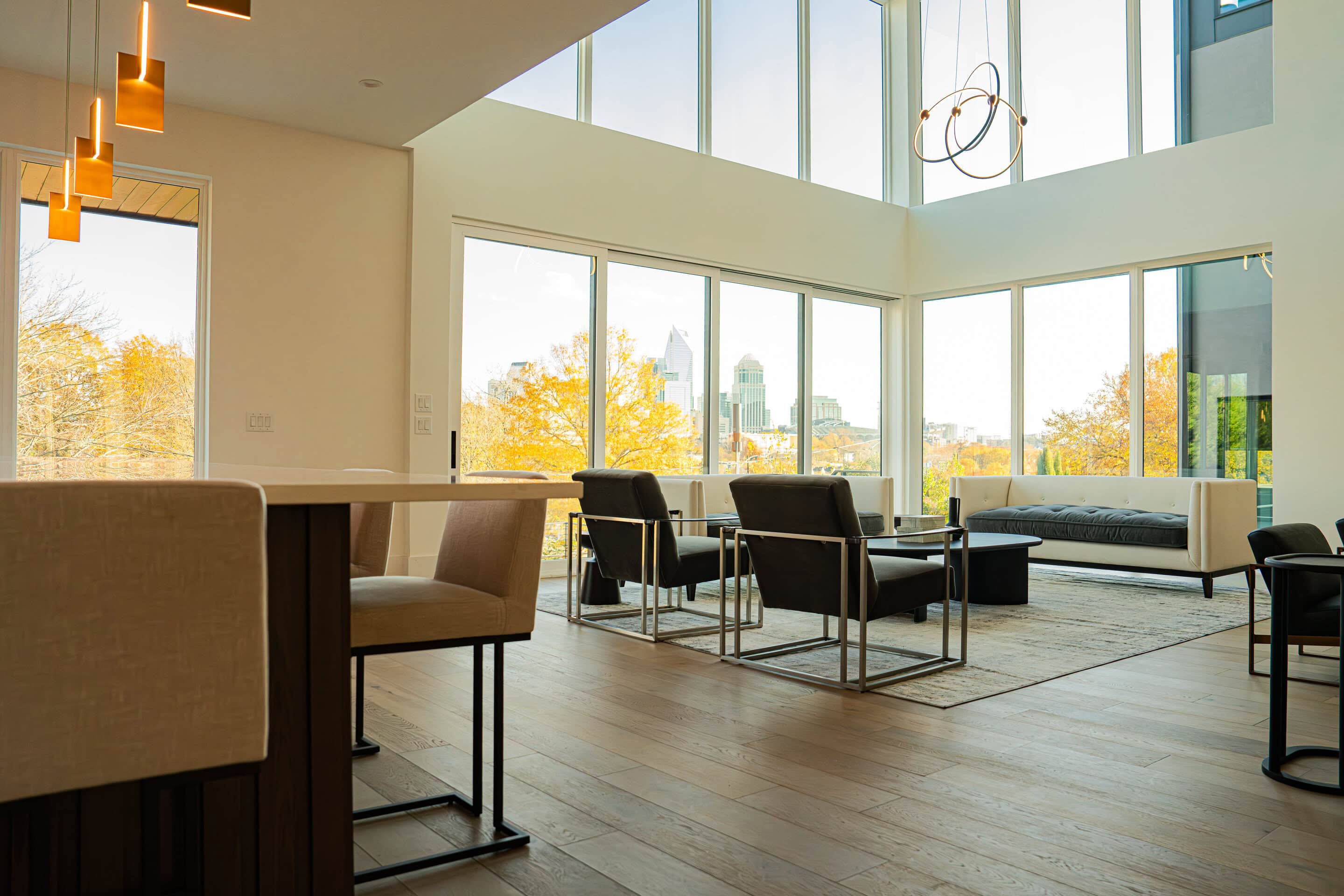
A staged home, supported by thoughtful interior designing, creates:
- Defined spaces
- Functional layouts
- Emotional cues
A dining table is no longer just an empty area. It becomes a place for gatherings.
A living room becomes a space for relaxation, not just square footage.
This is what extends the showing time.
And more time leads to stronger emotional attachment.
Stat 2: 75% of Sellers See a 5% to 15% Return on Staging
This is where staging moves from design into financial strategy.
Your data shows that approximately 75% of sellers see a 5% to 15% return on investment when they stage their homes.
Let’s translate that into real numbers.
- On a $500,000 home, that is $25,000 to $75,000
- On a $1 million home, that is $50,000 to $150,000
This is not a marginal gain. It is a significant increase in equity.

Why the ROI Is So High
Staging works because it impacts multiple parts of the selling process at once:
- It attracts more buyers
- It increases perceived value
- It reduces hesitation
- It strengthens offers
Instead of negotiating down, buyers are more likely to compete.
That competition is what drives price upward.
The Common Misconception About Cost
Many sellers hesitate because staging feels like an upfront expense.
But the data clearly shows that it behaves like an investment.
Spending a few thousand dollars to potentially gain tens of thousands in return is not a cost-saving decision. It is a profit-generating one.
The bigger risk is not staging at all.

Stat 3: Staged Homes Sell Up to 88% Faster
Speed is often underestimated in real estate, but it directly affects both stress and profit.
According to your transcript, staged homes can sell up to 88% faster than unstaged ones.
Why Speed Changes Everything
A faster sale has three major advantages:
1. Reduced carrying costs
Every extra day on the market adds expenses:
- Mortgage payments
- Utilities
- Insurance
- Maintenance
2. Stronger pricing power
Homes that sell quickly maintain momentum. They appear desirable and in demand.
3. Lower risk of price reductions
The longer a home sits, the more likely it is to require a price cut.
As noted in your provided material, price reductions can cost sellers far more than staging ever would.
The Hidden Cost of Time on Market
What many sellers overlook is how quickly perception shifts.
A fresh listing creates urgency.
A stale listing creates doubt.
Buyers begin to ask:
- Why hasn’t this sold
- Is something wrong with it
- Can I negotiate a lower price
Staging helps capture attention early, when the listing is most valuable.

How Interior Designing Amplifies These Results
Staging alone is powerful, but when combined with strong interior designing, the impact multiplies.
Interior design ensures:
- Proper layout and flow
- Balanced lighting
- Functional use of space
Staging builds on this by:
- Enhancing visual appeal
- Creating emotional connection
- Aligning the home with buyer expectations
Together, they create a complete experience that is both logical and emotional.
Why These Three Stats Matter Together
Individually, each stat is compelling.
But together, they tell a much bigger story.
- Buyers spend more time in the home
- That time creates emotional connection
- Emotional connection increases willingness to pay
- Faster sales protect pricing and reduce costs
This is not a coincidence. It is a system.
Staging influences behavior. Behavior influences outcomes.

The Competitive Advantage Most Sellers Miss
In a market where buyers have options, small differences in presentation create large differences in results.
Two homes with similar:
- Size
- Location
- Price
can perform very differently based on how they are presented.
The staged home:
- Gets more attention
- Creates stronger impressions
- Converts interest into offers
This is why staging consistently outperforms leaving a home empty or unprepared.
The Linden Creek Perspective
At Linden Creek, staging is not treated as decoration.
It is treated as a performance strategy.
Every decision is intentional:
- What will capture attention online
- What will hold buyers in the space
- What will create emotional connection
- What will justify the asking price
The goal is simple. Maximize the outcome of the sale.
Leave a Reply