
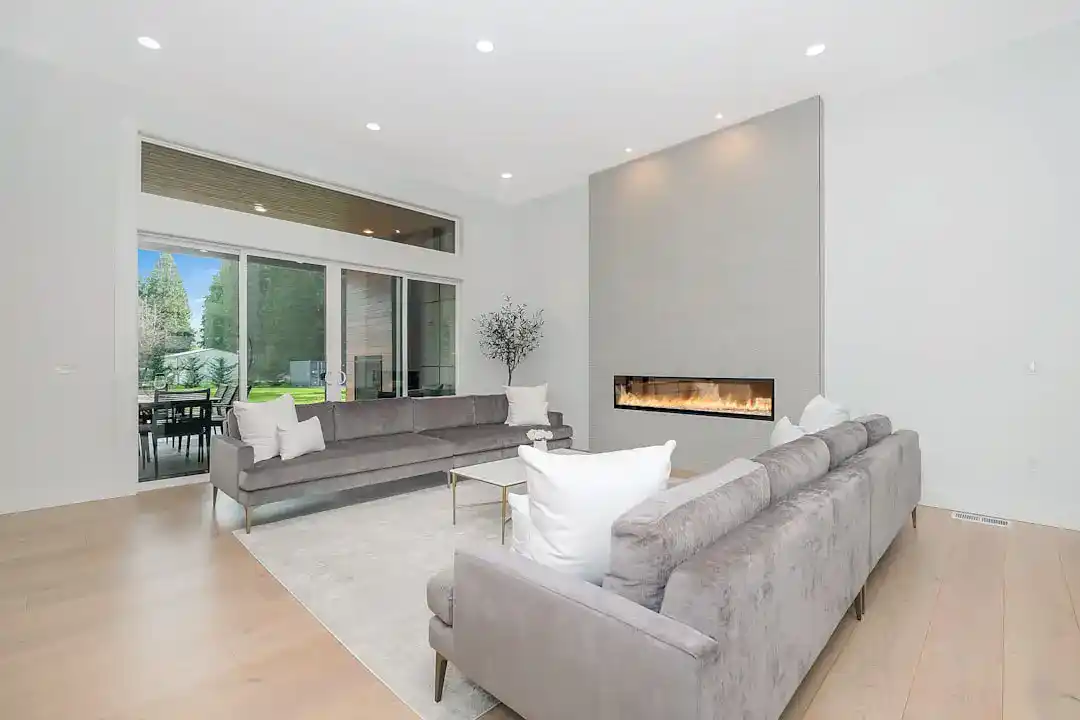
There is a moment in every staging consultation that reveals how differently professional stagers think about their work compared to how most sellers think about it. It happens when the stager pulls out their phone, walks to the far corner of a room, holds the phone up at eye level, and takes a photo.
Not a beautiful photo. Not a carefully composed shot with good lighting and a flattering angle. Just a quick, unedited, slightly awkward snapshot from the furthest distance the room allows.
Then they show it to the seller.
And in that moment, the seller sees their home the way a buyer is going to see it for the very first time. Not in person. Not with the warmth and dimension and sensory richness of standing in the actual space. But compressed into a two-dimensional rectangle on a small screen, everything visible simultaneously, every design decision on display at once, with no editorial control over what catches the eye first.
That ugly phone photo is a preview of the MLS photograph. And the MLS photograph is the front door that most buyers will encounter before they ever see the actual front door. It is where the decision about whether your home staging is worth a showing gets made, quickly, by a buyer scrolling through dozens of listings on a Tuesday evening with a glass of wine in their other hand. It is the most consequential marketing asset your listing has. And staging done at a professional level is designed around it from the very first decision.
This is not how most sellers think about staging. And it is not how most decorators think about space. It is how marketers think about presentations when they understand that the medium determines the message, and that the medium for real estate marketing in 2025 is a photograph on a screen.
Why the MLS Photo Is Nothing Like Standing in the Room
To understand why designing for the MLS photograph requires a fundamentally different approach than decorating a space for in-person enjoyment, you have to understand what a real estate photograph actually does to a room.
Real estate photography uses a wide-angle lens. This is not an artistic choice. It is a practical necessity. The goal of the listing photograph is to capture as much of a room as possible in a single frame, giving buyers an accurate sense of the full space rather than an intimate close-up of a specific detail. That wide-angle capture compresses three-dimensional space into two dimensions in ways that change almost everything about how a room looks and feels.
Distances change. Objects that feel comfortably separated in person look closer together in a wide-angle photo. The space between a sofa and a coffee table that feels natural when you are sitting in the room can look crowded when captured at a wide angle. Conversely, the distance between a piece of furniture and the far wall can look more generous in a photo than it feels in person.
Visual relationships change. Elements that your eye naturally skips over when moving through a room become permanently fixed in a photograph. A lamp cord trailing across the floor. A slightly off-center piece of art. A gap between two cushions that drew together unevenly. In person, these things register briefly and your attention moves on. In a photograph they exist forever, at the same prominence as everything else in the frame, because the photograph does not move and the eye returns to it repeatedly.
Color and pattern intensity change. Bold colors and strong patterns that look sophisticated and intentional in person can become visually dominant in a photograph, pulling the eye away from the room itself and toward the specific element rather than creating a harmonious overall impression. A throw pillow in a rich jewel tone that adds exactly the right pop of color when you are standing in the room can become the thing every buyer notices first in the listing photo, which means it is the thing shaping their initial impression of the entire space.
Scale relationships change. Furniture that is sized appropriately for the room in person can look either too large or too small depending on how the wide-angle lens captures its relationship to the walls, the ceiling, and the other elements around it. A sofa that feels perfectly proportioned when you are sitting on it can look either overwhelming or inadequate in a photograph, depending on what surrounds it and how those surroundings compress.
All of these differences mean that a room styled beautifully for in-person experience and a room staged effectively for photography are not automatically the same room. They require the same design vocabulary, the same quality of furniture and accessories, but applied with a different set of priorities that puts photographic performance at the top of the hierarchy.

The Phone Camera Hack in Practice
The phone camera exercise that professional stagers use is not just a check at the end of the staging process. It is a diagnostic tool used throughout, and understanding how it works in practice reveals the level of photographic thinking that goes into every significant staging decision.
When a stager enters a room and begins making decisions about furniture placement, the phone test is applied at each major decision point. The sofa is positioned and the stager steps back and photographs the room. Does the sight line from this angle feel open and generous? Does the sofa scale feel right in relation to the back wall? Is there anything in the frame that is pulling the eye away from the strongest features of the room?
When accessories are being placed on a coffee table or a shelf, the phone comes out again. At the distance the listing photographer is going to stand, do these objects read as a cohesive, intentional grouping? Or do they read as visual noise, a collection of things rather than a designed moment? Are any of the objects tall enough to register at all at that distance, or are they so small that they disappear entirely and leave the surface looking sparse rather than styled?
When art is being hung, the phone test determines the height. Art hung at the interior designer’s standard of eye level for a person standing in the room may be too low in a listing photograph, where the camera is often positioned slightly above typical eye height to capture more of the room. Art that is too low sits in a range of the photograph that is already occupied by furniture, creating competition rather than composition. Art hung slightly higher creates a more effective relationship between the vertical planes of the room and the horizontal ones, which reads better in the compression of a wide-angle photograph.
These adjustments are small in terms of inches and centimeters. They are significant in terms of how the resulting photograph performs as a marketing asset. And they are only made by stagers who are thinking about the photograph as the primary audience for their work rather than the in-person showing.
The Books Technique: A Perfect Case Study in Photography-First Staging
Of all the specific staging techniques that reveal the photography-first philosophy in action, the books technique is one of the most instructive because it produces a result that looks almost unexplainable until you understand the logic behind it.
Many homes, particularly in the luxury market, have built-in bookshelves. These are typically beautiful architectural features, well-crafted and prominent. They often run floor to ceiling and span an entire wall, making them one of the most visually significant elements in the room. How they are styled has an enormous impact on the overall feeling of the space and on how the room photographs.
The instinctive styling approach is to fill them with a varied and curated collection. Books of different heights and colors, interspersed with framed photos, small sculptures, decorative objects, plants, and the other items that make a shelf look lived in and interesting. This approach can look genuinely beautiful when you are standing in the room, close enough to appreciate the individual objects and the thought that went into their arrangement.
In the listing photograph, taken from fifteen or twenty feet away through a wide-angle lens, the result is often visual chaos. All of those varied colors and sizes and shapes, which read as richly layered detail up close, read as visual noise at a distance. The eye has nowhere to settle. The shelf competes with the rest of the room for attention rather than supporting it. And buyers who encounter the listing photograph see a room that feels busy rather than beautiful.
The photography-first solution is to use books with matching spines. Selecting books whose bindings are all the same color, or whose bindings are all turned to face the wall so that only the neutral white of the pages shows, creates a calm, unified, repeating pattern across the shelf surface. At the scale of a listing photograph, this reads as clean, ordered, and sophisticated. The shelf stops competing with the room and starts supporting it, providing a visual backdrop that lets the architecture and the other design elements carry the space.
In person, this styling choice looks simple. It might even look slightly sparse to someone accustomed to richly decorated interiors. But the listing photograph is not taken from the perspective of someone standing in the room. It is taken from a distance that changes everything about what reads as beautiful. And at that distance, the matching books create exactly the effect that the photography-first philosophy is designed to produce.
This is staging logic rather than design logic. And it produces listing photographs that perform as marketing assets rather than as portfolio images.

Visual Noise: What It Is and Why It Kills Listing Photos
The concept that runs through all of the photography-first decisions professional stagers make is visual noise, understanding what creates it and being ruthless about eliminating it before the photographer arrives.
Visual noise is anything in a photograph that draws the viewer’s eye away from the thing you want them to focus on. In a listing photograph, the goal is for the eye to land on the room itself, on its scale and light and potential, on the features that make the property desirable. Visual noise directs the eye away from those things and toward the noise itself, which means buyers are forming impressions about the noise rather than about the home.
Visual noise comes from pattern density. Too many competing patterns in a single room, a patterned rug, a patterned throw, patterned cushions, patterned curtains, create a photograph that feels overwhelming rather than inviting. Each pattern fights for visual dominance and the room loses.
Visual noise comes from color fragmentation. When too many distinct colors are present in a single frame, the eye moves rapidly between them rather than settling on any one thing. The result is a photograph that reads as restless and busy. A tighter, more unified color palette creates photographs that feel calm and ordered, which is the emotional register that produces buyer engagement rather than buyer overwhelm.
Visual noise comes from clutter at the edge of the frame. Listing photographers try to capture the best angle of each room, but wide-angle lenses pull in everything. A pile of shoes near the door, a bag on a chair, a stack of papers on a side table, these things appear in the photograph even if they are technically at the edges of the room. Eliminating everything that does not serve the composition before the photographer arrives is part of the staging job.
Visual noise comes from inconsistent scale. Accessories that are too small for their context disappear or create a spotty, disconnected visual impression. Accessories that are too large overwhelm the surfaces they sit on. Getting the scale right, which means selecting accessories that read clearly and confidently in a wide-angle photograph, requires thinking about how they will look in the photo rather than how they look in the hand.
Eliminating visual noise is not a negative act, removing things to create emptiness. It is a positive act, clearing the visual field so that what remains reads clearly, calmly, and compellingly in the compressed space of a listing photograph.
Sight Lines and the Camera’s Eye
There is another dimension of photography-first staging that goes beyond how individual elements photograph and into the spatial relationships that the camera captures between elements throughout the entire room.
The listing photographer is going to position their camera at specific points in each room to capture the most compelling available angle. Professional stagers learn to anticipate those positions and to ensure that the sight lines from each camera position are as powerful as possible.
A sight line, in staging terms, is the visual path from the camera position to the most compelling feature of the room. If the room has a fireplace, the sight line from the entry door to the fireplace should be clear and unobstructed, so that the listing photograph captures the relationship between the entry experience and the room’s focal point. If the room has a view, the sight line from the furniture grouping to the window should position that view as a visible backdrop rather than a peripheral detail.
Furniture that blocks important sight lines does not just reduce the quality of the in-person showing. It reduces the quality of the listing photograph, which means it reduces the number of buyers who click through to schedule a showing, which means it reduces the number of people who will ever see the home in person. The financial cost of a blocked sight line begins in the thumbnail and compounds through every subsequent step of the buyer journey.
This is why staging cannot be done without thinking about photography, and photography cannot be done without staging. They are two parts of the same marketing system. The staging creates the sight lines and the visual hierarchy. The photography captures them and distributes them to every buyer who is actively searching in the price range and area. And the showing is where buyers who responded to the photograph come to confirm what the photograph promised.
Each stage depends on the one before it. And the staging depends on a clear understanding of how the photograph will work, which depends on thinking like a photographer while making design decisions.

Why Most Sellers Never Think About This
The reason most sellers do not approach their home’s preparation with the photography-first mindset that professional stagers apply is simple and understandable. They experience their home from the inside, in person, every day. Their entire relationship with the space is built on the three-dimensional, sensory, lived experience of moving through it. They see it the way it actually is, not the way a wide-angle lens at the back of a room will represent it.
When sellers prepare their homes to sell without professional guidance, they are making decisions based on how things look and feel from the inside of the lived experience. They style the coffee table with the objects that mean something to them. They arrange the furniture for the comfort and functionality that their daily life requires. They leave the shelf full of the books and objects that make the home feel like home.
And then the listing photograph is taken. And none of those decisions were made with the photograph in mind. And the photograph that results is the first impression buyers form of the property. And that impression is doing something entirely different from what the seller imagined because the medium changed everything.
Professional staging short-circuits this mismatch by replacing the seller’s inside perspective with a photographer’s outside perspective from the very beginning of the design process. Every decision is made through the lens of how it will look in the photograph, because the photograph is where the buyer relationship begins and the buyer relationship is what ultimately produces the offer.
That is the shift that makes professional staging worth the investment for any seller who wants their listing to perform at its full potential online before a single buyer has scheduled a showing.
What This Means Before the Photographer Arrives
If you are preparing to list and want to ensure that your listing photographs perform as marketing assets rather than just records of how your home looks, there are specific things that happen before the photographer arrives that determine the quality of what the camera captures.
The staging is completed before the photographer arrives. Not after. Not simultaneously. Before. Because the staging decisions that are made with the photograph in mind are the decisions that produce the photographs that generate showings. A home photographed before staging is complete has had its most important marketing moment compromised before the listing goes live, and first impressions, as every piece of buyer behavior research confirms, are extraordinarily resistant to revision.
The phone test is applied to every significant room before the photographer arrives. The wide-angle simulation of holding up a phone from the far corner of each space and checking what the resulting image reveals is the most practical and accessible quality control step available to any seller or stager preparing a home for listing photography.
Visual noise is eliminated systematically. Every surface is reviewed not for whether it looks good up close but for whether it contributes to or detracts from the room’s clarity and calm at listing-photograph scale. Everything that creates noise, competes for attention, or directs the eye toward itself rather than toward the room is removed or replaced before the camera appears.
Sight lines are verified. The clear path from the most likely camera position to the room’s strongest feature is unobstructed. The view from the entry is the most important, because the entry photograph is usually the listing’s hero image and the one that most buyers see first.
All of this preparation, executed with the photograph as the primary audience, is what produces listing images that stop buyers from scrolling past, generate the 73% more online views that staged homes consistently earn over unstaged ones, and create the first impression that carries a buyer from a thumbnail to a showing to an offer.

The Bottom Line
The MLS photograph is not an afterthought. It is the beginning of the entire buyer relationship. And staging designed with the photograph in mind from the first decision to the last is staging that treats the photograph with the strategic respect it deserves.
The ugly phone photo that a professional stager takes in the far corner of a room is not a casual quality check. It is a fundamental act of marketing discipline. It is the stager asking whether every decision they have made will translate through the medium that matters most into the impression that produces the outcome the seller is working toward.
That question, asked honestly and answered through every furniture placement, every accessory choice, every sight line decision, and every visual noise elimination, is what produces listing photographs that perform. And listing photographs that perform are what produce the showings, the offers, and the closing table outcomes that justify every dollar of the staging investment.
If you are preparing to list and want your listing photographs to do the marketing work they are capable of doing, connect with the Linden Creek team for a staging consultation. We will walk through your home with the photographer’s lens already in mind, make every design decision with your listing’s online performance as the primary objective, and ensure that the first impression buyers form of your home is the one that makes them pick up the phone.
Because in today’s market, the buyer who never clicks through never walks through. And the click begins with the photograph.
Leave a Reply