
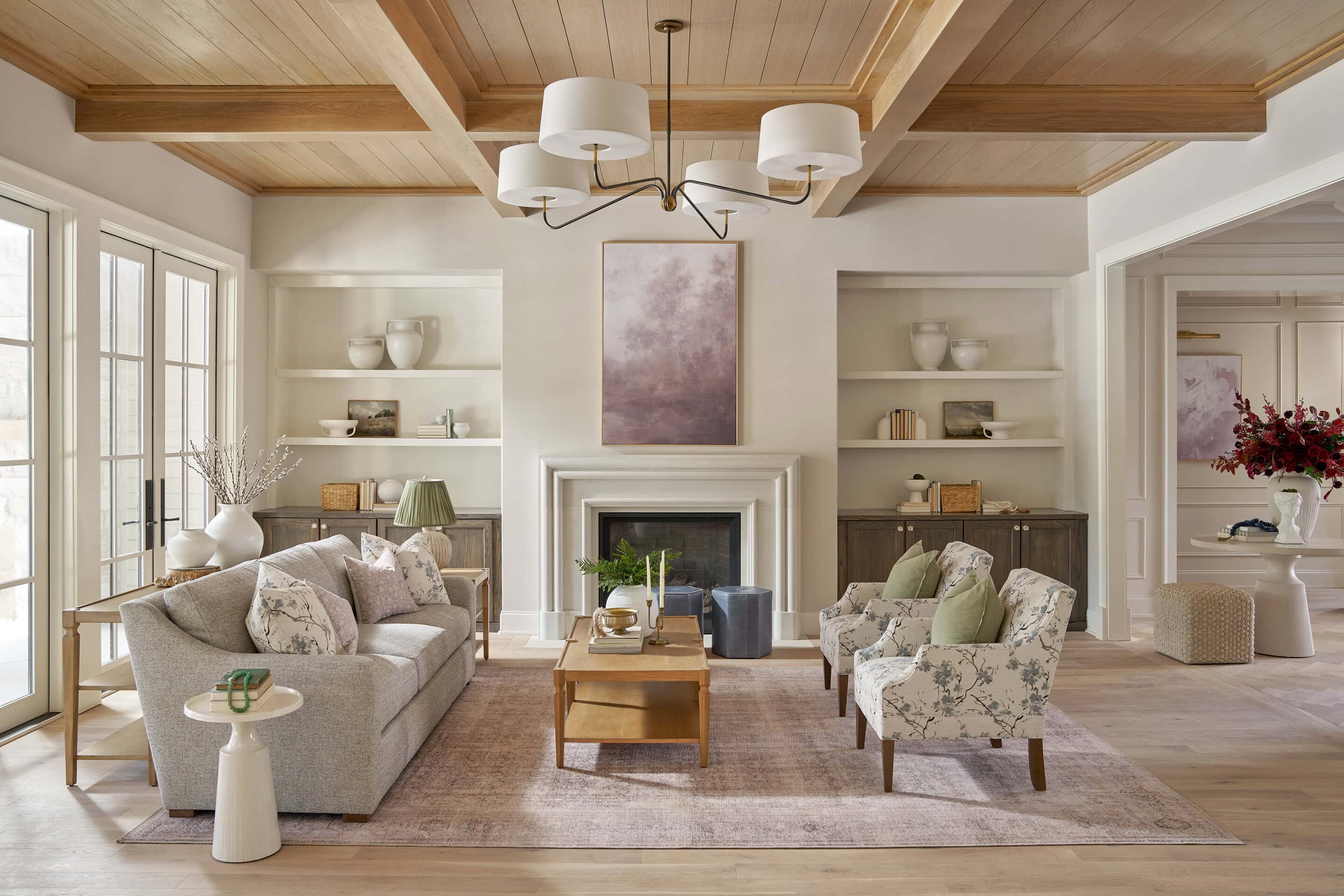
There is a moment that every great interior design project shares — and it’s different from anything else. It’s the moment you walk back into your own home after the work is done, and something shifts. The space looks beautiful, yes. But more than that, it finally feels right. Not right the way a showroom looks perfect under flattering retail lighting — right in the way that makes you take a slow breath and feel genuinely at ease. That feeling is quiet and powerful and deeply personal. And it is the whole point.
At Linden Creek, we believe home is your haven. Not a Pinterest board made physical. Not a collection of expensive furniture. Not a space that impresses guests at the expense of the people who actually live there. A haven — a place that reflects who you are, supports how you move through your days, and offers something genuinely restorative every time you walk through the door. That’s what good interior design delivers, and it’s what we’ve built our entire practice around.
The Most Common Misconception About Interior Design
Before we get into how the process works and what transforms a space, it’s worth addressing the most persistent misunderstanding we encounter: the idea that interior design is about imposing a vision. That you hire a designer, step aside, and let them do something to your home that reflects their aesthetic rather than yours.
At Linden Creek, the process is fundamentally different — and we believe any design practice worth working with will tell you the same thing. Before we pull a single fabric sample, specify a piece of furniture, or recommend a paint color, we listen. We ask about your life. How do you use this room? What time of day do you spend the most time here? What’s frustrating you about the space right now? What does “comfortable” mean to you? What are you hoping to feel when you walk in the door?
Those questions aren’t small talk. They’re the foundation of every decision we make. A family with young children needs different solutions than a couple who entertains regularly. A remote professional who requires a focused, distraction-free home office has different priorities than someone designing a serene weekend retreat. Great interior design is always responsive — to your life, your habits, your aesthetic sensibility, and the specific bones of your space. The designer’s job is to translate all of that into something cohesive, beautiful, and entirely your own.
“Communication was wonderful. Linden Creek helped me select furniture and fabric that was perfect for the space and our lifestyle. My home is so fresh and inviting — everyone that enters raves about the results. I was pleased that they listened to all of my ideas while adding their own touch. The results exceeded my expectations.” — Emily

The Details That Actually Change How a Room Feels
People often assume that transforming a home requires a major renovation — new walls, new floors, a complete furniture overhaul. Sometimes that’s the right approach. But more often, the most dramatic improvements come from changes that are precise rather than wholesale. Understanding which details have the greatest impact is one of the most valuable things an experienced interior designer brings to the table.
Lighting is, without question, the single most underestimated element in any interior. The same room can feel warm and intimate or cold and institutional depending entirely on how it’s lit. Overhead recessed lighting washes everything in a flat, even glare that eliminates depth and shadow. Layered lighting — a combination of ambient, task, and accent sources — creates warmth, visual interest, and a quality of light that makes people feel comfortable without being able to explain exactly why. No paint color, no furniture choice, and no accessory can do what the right lighting does. If you’re going to invest in one element of a redesign, start there.
Scale and proportion are the invisible backbone of every well-designed room. A sofa that’s too small for a living room makes the space feel sparse and disconnected. One that’s too large makes it feel cramped and difficult to navigate. The same principle applies to rugs — the single most common design mistake is choosing a rug that’s too small, which chops the room into disconnected zones. Getting scale right doesn’t require expensive furniture; it requires understanding the geometry of the space and making deliberate choices. This is exactly the kind of calibrated judgment that an experienced designer brings — and that most homeowners don’t have access to on their own.
Texture and material layering are what give a room life. A beautifully proportioned space with excellent lighting but only one or two materials will still feel flat and incomplete. Linen, wool, natural wood, stone, ceramic, and soft pile each bring their own quality to a room, and the way they interact with each other — and with light — is what creates the kind of richness and depth that makes a space feel genuinely luxurious. You don’t need rare materials or expensive finishes. You need enough variety that the eye finds something to explore at every layer, from the floor to the ceiling.

Where to Start When You’re Feeling Overwhelmed
One of the most common things we hear from new clients is some version of: “I know something is wrong with this room, but I can’t figure out what it is.” That instinct — that quiet sense of friction or dissatisfaction — is actually a very useful starting point. It means your eye is working. Something genuinely isn’t right, and identifying it is the first step toward fixing it.
Our recommendation is always to start with the room that bothers you most. Not the one that’s most visible to guests, not the one that photographs best. The room that you avoid, or that you’ve mentally written off, or that you’ve been meaning to fix for two years but haven’t. That room is usually the one where a well-executed redesign will make the biggest difference to your daily quality of life — and where the improvement will unlock clarity and motivation for the rest of the home.
Sometimes the solution is comprehensive: new furniture, new lighting, new window treatments, a complete reimagining of the space. More often, the solution is surgical. A room that feels wrong because of one over-scaled piece of furniture. A living room that feels dark because the sofa is blocking the window. A bedroom that feels chaotic because there’s no considered hierarchy of furniture. The skill is knowing which intervention will have the greatest effect — and having the experience to recognize it quickly.

Interior Design as an Investment in Your Everyday Life
We spend a remarkable amount of time in our homes — more, for many people, than anywhere else in the world. And yet, most of us tolerate spaces that feel “fine” rather than genuinely investing in making them feel exceptional. We upgrade our cars, our wardrobes, our phones. We hesitate to invest in the environment where we spend the majority of our waking hours.
The research on this is consistent: our physical environment has a measurable effect on our mood, stress levels, cognitive performance, and overall sense of well-being. A home that is organized with intention, lit thoughtfully, and designed to support the activities that matter to you isn’t a luxury — it’s a contribution to your quality of life that compounds every single day.
At Linden Creek, we’ve worked with clients who came to us frustrated, overwhelmed, and exhausted by spaces that weren’t working. We’ve seen the before and after — not just in the rooms themselves, but in how our clients feel about being home. That transformation is something we take seriously, and it’s why we put so much care into every project, regardless of scope or budget.
What a Linden Creek Design Project Looks Like
Every project begins with a conversation. We learn about your life, your goals, your timeline, and your investment range. From there, we develop a design concept that addresses the specific opportunities and challenges of your space — and then we execute it with precision, care, and a level of attention to detail that our clients consistently tell us they didn’t expect.
Our services range from focused single-room refreshes to full-home transformations, and we’re happy to meet you wherever you are in that spectrum. Whether you need a complete overhaul or simply a trusted eye to tell you what’s not working and what to do about it, we’re here.
Your home should feel like you. Not like a hotel, not like a magazine, not like what someone else told you was beautiful. Like you. That’s the standard we hold ourselves to — and we’d love the opportunity to help you meet it.
Leave a Reply