
Think about the last time you met someone for the first time and formed an immediate opinion about them. Maybe it was a job interview, a blind date, a new neighbor walking across the lawn to introduce themselves. Whatever the scenario, something happened in those first few seconds that set the tone for everything that followed. You registered their appearance, their energy, the way they carried themselves, and before a single meaningful word had been exchanged, you had already begun forming a picture of who they were.
You probably did not do this consciously. You did not run through a checklist or deliberate carefully before arriving at your impression. It happened automatically, instantly, and with a kind of certainty that felt entirely reliable even though it was based on almost no information at all.
This is how human beings are wired. And it is also, whether sellers realize it or not, exactly how buyers experience a home.
The first impression a buyer forms of a property is not formed during the offer negotiation, or after the inspection, or even during the walkthrough. It is formed in the first seconds of encountering that home, whether online through a listing photo or in person at the front door. And once that impression is formed, everything that follows is filtered through it. A strong first impression makes buyers generous, curious, and emotionally open. A weak one makes them critical, cautious, and already looking for the exit.
Understanding this dynamic, and understanding how professional staging is specifically designed to control it, is one of the most important things a seller can do before their listing goes live.
The Story of Susie and John
Let’s make this concrete with a scenario that plays out in some version every single day, in every single real estate market, in every price bracket.
Imagine two guys. Both are going on a first date with someone they genuinely like and want to impress. Both of them know the date is important. Both of them want it to go well.
The first guy thinks about his appearance before he walks out the door. He puts on a clean, well-fitted button-down shirt with a pair of jeans that look sharp without being overdressed. His shoes are presentable. He smells good. He has put some thought into how he is showing up and the result is a version of himself that communicates care, effort, and self-respect.
The second guy does not think much about it. He goes with gym shorts and a t-shirt. Not because he does not care about the date, but because he figures the other person will see past the clothes and get to know who he really is. He tells himself that appearances should not matter, that the right person will look deeper, and that what is on the inside is what counts.
The first guy gets a second date. The second guy spends the rest of the evening trying to overcome an impression that was set before he sat down.
Now take that exact scenario and apply it to a home being listed for sale. The property is the guy. The buyer is the date. And the presentation, the staging, the photographs, the way the home shows up at the very first point of contact, is the outfit he chose to walk out the door in.
This is not a metaphor about superficiality. It is a metaphor about the reality of how first impressions work, how quickly they form, and how stubbornly they persist even when subsequent evidence might suggest a different conclusion. Buyers are making assumptions about a home from the first photo they see online. They are forming opinions about its value, its condition, its lifestyle potential, and whether it is worth their time before they have ever stepped inside. The seller who understands this is the seller who prepares accordingly and benefits financially from that preparation.

Seven Seconds That Shape Everything
Research on first impressions has consistently found that people form their initial judgments in roughly seven seconds. Some studies suggest the window is even shorter, as little as a few milliseconds for certain types of visual assessments. What this means in practical terms is that a buyer standing at the front door of a home has already registered a significant portion of their emotional response before they have crossed the threshold.
They have taken in the condition of the exterior. They have noticed whether the front door looks fresh or tired. They have formed an impression of the neighborhood, the landscaping, the way the home sits on the lot. They have felt something, some version of excitement or flatness or unease, that is already coloring the lens through which they will view everything inside.
Once they step through the door, the process accelerates. The entry sets the tone. The living room either delivers on the promise of the entry or it doesn’t. The kitchen either sustains the emotional momentum of the first two spaces or it interrupts it. Each room is an opportunity to either deepen the buyer’s connection to the home or give them a reason to start detaching from it.
Professional staging is designed to win every one of those moments. Not just the living room, not just the primary bedroom, but the full sequence of experiences from the first photo online through the final room of the showing. A well-staged home creates a consistent, building emotional arc that carries a buyer from initial interest to genuine desire. And genuine desire is what produces offers.
A home that is not staged, or that has been prepared without strategic intention, creates a different experience. The moments that should be peaks become flat. The emotional arc that should be building stalls out. The buyer who walked in with genuine interest walks out with a vague sense that something was missing, without necessarily being able to articulate what it was. And a buyer who cannot articulate what they are looking for in a home they pass on is a buyer who gets in their car, drives to the next showing, and immediately starts falling in love with something else.
The Online First Impression: Where the Real Battle Is Fought
Here is a dimension of the first impression problem that compounds everything discussed above and that sellers in today’s market cannot afford to underestimate.
The first showing for almost every buyer is not the in-person walkthrough. It is the listing photos on the MLS, on Zillow, on Realtor.com, on whatever platform a buyer and their agent are using to filter properties before deciding which ones are worth visiting in person. By the time a buyer schedules a showing, they have already made a meaningful decision about a home based entirely on how it was presented online.
This means that staging is not just about what a buyer experiences inside the home. It is about whether the buyer decides to come inside at all.
Staged homes generate 73% more online views than properties that were listed before staging was completed. More views mean more attention from buyers who are actively searching in your price range. More attention means more showing requests. More showing requests mean more buyers walking through the door, which means more opportunities for the emotional connection that produces offers.
But this only works if the staging was completed before the photographer arrived. A home staged after initial listing photos have already been published is fighting an uphill battle because the first impression, the one that determines whether buyers click through or scroll past, has already been made. And first impressions, as we have established, are remarkably resistant to revision.
According to NAR’s 2025 data, 31% of buyers were more willing to visit a home they first saw online when it was staged. That number represents real buyers, in real markets, making real decisions about which homes are worth their time based on what they saw in a photograph. Staging that makes a home stop the scroll is staging that generates the showing. And the showing is where everything that follows becomes possible.

What Buyers Decide Before They Ask a Single Question
There is something important happening in a buyer’s mind during a showing that most sellers are not fully aware of, and understanding it changes how you think about preparation entirely.
When buyers walk through a home, they are running two parallel processes simultaneously. The conscious, logical process is taking notes. Counting bedrooms, checking the kitchen layout, assessing storage, evaluating the condition of finishes. This is the process buyers can describe and report on. It is the one that shows up in the feedback their agent relays to the listing agent after the showing.
But underneath that conscious process, there is an emotional process that is doing something entirely different. It is determining whether this home feels like home. Whether the buyer can picture their life here. Whether the space produces the feelings, safety, warmth, aspiration, excitement, calm, that the buyer has been carrying in their imagination as the definition of what they are looking for.
This emotional process does not wait for the conscious one to finish gathering data. It is running from the first second, responding to everything in the environment, and arriving at conclusions that the conscious mind then works backward to justify. Buyers rarely say “I decided not to make an offer because the emotional environment of the home did not trigger sufficient aspiration in the limbic system.” They say “something felt off” or “it just didn’t feel like home” or “I’m not sure exactly why, but I wasn’t excited about it.”
Those are emotional assessments masquerading as practical ones. And staging is what controls the emotional environment that produces them.
A home that is staged with buyer psychology in mind produces the feelings that buyers are searching for. It creates the warmth that reads as comfort, the sense of scale that reads as generosity, the lifestyle story that reads as aspiration. It does this not through decoration but through deliberate, strategic design choices made with a thorough understanding of what buyers in a specific market and price bracket are emotionally responding to.
A home that is not staged, or that has been decorated to the seller’s taste rather than presented for the buyer’s imagination, produces a different set of feelings. Sometimes those feelings are neutral. Sometimes they are subtly discouraging. But rarely are they the “I have to have this” feeling that converts a showing into an offer.
The Compounding Effect of a Strong First Impression
One of the most powerful things about a strong first impression in real estate is what it does to everything that comes after it.
When a buyer walks into a beautifully staged home and immediately feels that emotional pull, something shifts in how they process the rest of the showing. They become generous observers rather than critical ones. The small imperfections that every home has, the scuff on the baseboard, the dated light fixture in the secondary bathroom, the slightly awkward corner of the breakfast nook, get filtered through a lens of excitement rather than skepticism.
This is the phenomenon that Alisa at Linden Creek has described watching play out over and over in real transactions. A home with a small kitchen that was turning buyers away, once staged to create emotional peaks in every other room, suddenly started generating offers. Buyers who fell in love with the living room, the primary suite, the beautifully presented dining space, arrived at the kitchen already emotionally committed. The kitchen, which had loomed as a dealbreaker in an empty home, became a minor consideration in the context of a home they already wanted.
Staging does not fix problems. It creates the emotional context in which buyers evaluate problems differently. And that shift in emotional context is worth far more, in financial terms, than most sellers realize when they are deciding whether preparation is worth the investment.
The flip side is equally true and equally important. A weak first impression compounds in the opposite direction. A buyer who walks into a home and feels nothing, or worse, feels that something is wrong, becomes a critical observer. Every imperfection gets amplified. Every quirk becomes a concern. The same scuff on the baseboard that a delighted buyer would never notice becomes, to a flat or suspicious buyer, evidence that the home has not been well cared for. The carrying costs, the price reduction risk, the extended days on market, all of these financial consequences begin in that first impression moment and compound from there.

The Price Anchoring Effect of First Impressions
There is another financial dimension to first impressions in real estate that does not get enough attention: price anchoring.
Price anchoring is a well-documented cognitive phenomenon where the first piece of information a person encounters on a topic sets a reference point that influences all subsequent judgments about it. In home buying, this means that the first impression a buyer forms of a home’s quality, condition, and desirability becomes the anchor against which the asking price is evaluated.
A buyer who walks into a beautifully staged home and feels immediately impressed is anchoring their price expectation upward. They are processing the home as high quality, high value, and worth the asking price or close to it. When they see the list price, they are evaluating it against an internal sense of the home that staging has deliberately shaped to communicate value.
A buyer who walks into an unstaged or poorly presented home anchors downward. They are processing the home as one that needs work, one that has been overlooked, one that is going to require investment to become what they are looking for. When they see the list price, they are evaluating it against a much lower internal reference point. And their offer, if they make one, reflects that lower anchor.
This is one of the mechanisms behind the data showing that staged homes consistently command higher sale prices than comparable unstaged ones. It is not just that buyers like them more. It is that staging shapes the price anchor before a single negotiation conversation begins, and that anchor is extraordinarily difficult to move once it has been set.
According to NAR’s 2025 data, nearly 29% of real estate professionals reported that staging led to a 1 to 10% increase in the dollar value offered. On a $500,000 home, that is $5,000 to $50,000 in additional sale proceeds attributable, in large part, to the price anchoring effect of a first impression that staging controlled from the very beginning.
What a Well-Staged First Impression Actually Looks Like
Let’s bring this out of the abstract and into the specific, because the principle is only useful if it translates into concrete preparation decisions.
A well-staged first impression begins before the front door. Curb appeal matters because exterior photos are often the first thing a buyer sees, and a tired or uninviting exterior can eliminate a showing before the interior even has a chance to make its case. Fresh paint on the front door, clean landscaping, simple potted plants flanking the entry, and a clear, uncluttered path to the door are low-cost moves with outsized impact on the digital first impression.
Inside, the entry is the most important space in the home for staging purposes, because it sets the tone for everything that follows. An entry that feels clean, welcoming, and intentional tells the buyer immediately that this home has been cared for and prepared with thought. An entry that feels cluttered, dark, or dated tells a different story before the buyer has seen a single other room.
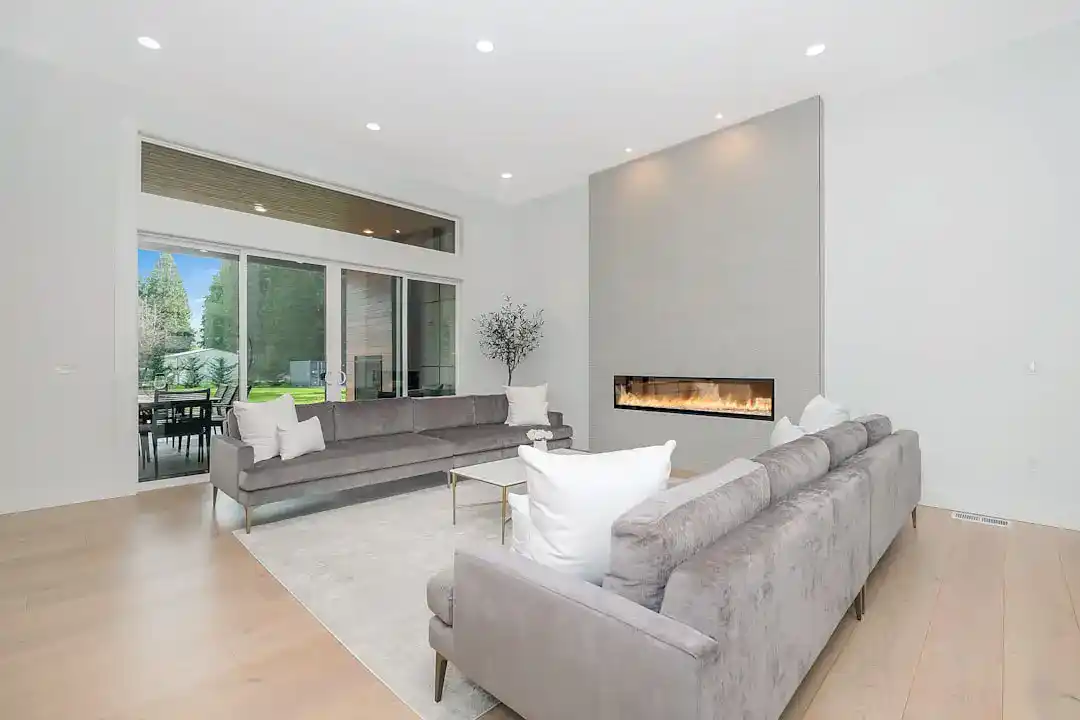
From the entry, staging must sustain and build the emotional momentum. The living room needs to feel generous and livable, not oversized and empty or cramped and cluttered. The furniture placement needs to create clear sight lines to the home’s best features, whether that is a fireplace, a view, or an architectural element worth celebrating. The palette needs to be warm enough to feel inviting without being specific enough to feel excluding.
The primary bedroom needs to feel like an aspirational retreat, the kind of space a buyer imagines coming home to at the end of a long day and feeling immediately restored. The kitchen needs to communicate function and warmth even if it is not the largest kitchen on the market. And every room needs to have at least one visual moment, one styled vignette or focal point, that gives the buyer something beautiful to fix their attention on and remember when they are sitting across from their agent that evening deciding whether to make an offer.
This is what Linden Creek builds into every staging project from the very first consultation. Not just a beautiful room, but a sequence of first impressions, each one earning the buyer’s trust and deepening their emotional connection to the home. By the time that buyer reaches the last room of the showing, they are not evaluating the home objectively. They are already imagining their life in it. And that is exactly where a seller wants a buyer to be.

The 15% Advantage and Why It Matters Right Now
Across the country, only about 15% of homes are staged before they hit the market. That means the overwhelming majority of sellers are showing up to the date in the gym shorts and t-shirt, hoping that buyers will see past the presentation to the value underneath.
Some of those sellers get lucky, particularly in hot markets where scarcity does the work that strategy should be doing. But in today’s Atlanta market, where inventory is up nearly 50% year-over-year in some months and buyers have real options, luck is not a listing strategy.
The sellers in that 15% who stage before listing are not just making their homes look better. They are controlling the first impression at every point of contact, from the thumbnail on the MLS to the moment the buyer steps through the front door to the last room of the showing. They are anchoring price expectations upward before negotiations begin. They are creating the emotional experience that produces offers rather than polite pass-throughs. And they are doing all of this in a market where 40% of their competition has already resorted to price reductions because they did not.
Being in the 15% is not complicated. It requires understanding what staging actually is, making the decision to invest in it before listing rather than after, and working with a team that brings both the design craft and the strategic intelligence to execute it at a level that performs.
The Bottom Line
Every home gets a first impression. The only question is whether that impression was designed or left to chance.
Buyers are making decisions in seven seconds. They are forming emotional assessments before they ask a single practical question. They are anchoring their price expectations based on how a home presents before a single number is discussed. And they are deciding, consciously or not, whether a home feels like theirs from the moment they first encounter it online or in person.
Staging is what controls all of that. It is the tool that ensures the first impression is not just good but strategic. Not just attractive but psychologically calibrated to produce the emotional response that moves buyers from curious to committed.
The seller who invests in that first impression is the one who collects the financial benefit of it. The seller who leaves it to chance is the one who discovers, six weeks and one price reduction later, what that chance decision actually cost.
If you are preparing to list, connect with the Linden Creek team for a staging consultation. We will assess your home through the lens of buyer psychology, identify the moments that matter most, and build a presentation strategy designed to win the first impression at every point of contact.
Because in real estate, the first seven seconds are not a formality. They are the whole game.
Leave a Reply